
HireLink

Uncategorized

India’s Pharma M&A Boom in 2026: Why the Real Success of Every Deal Depends on Talent Strategy 

The Indian pharmaceutical industry has entered a defining phase of global growth.  During the April–June 2026 quarter, the sector recorded its highest mergers and acquisitions (M&A) activity in the last four years, with 35 deals valued at $13.2 billion. The surge in deal activity reflects an industry that is actively investing in strengthening capabilities, expanding portfolios, and positioning itself for long-term growth in an increasingly competitive global healthcare landscape.  The headlines have largely focused on billion-dollar transactions, record-breaking deal values, and landmark acquisitions.  However, there is another story unfolding behind these numbers – one that deserves equal attention.  What happens after the acquisition is completed?  Because while the financial transaction may close in a matter of months, building a stronger organization takes years.  M&A is No Longer About Becoming Bigger  Traditionally, mergers and acquisitions were often viewed as a way to increase market share or expand revenues.  Today’s pharmaceutical landscape tells a different story.  Companies are investing in acquisitions to:  Recent strategic acquisitions by leading Indian pharmaceutical companies reflect a broader shift in business strategy. Rather than focusing only on an increasing scale, organizations are investing in capabilities that will strengthen their competitiveness in global healthcare markets.  For India’s pharmaceutical industry, this marks an important transition, from being recognized primarily as the “pharmacy of the world” to becoming a strategic global healthcare partner driven by innovation, quality, and specialized expertise.  The Real Challenge Begins After the Deal Closes  Company cultures must come together while maintaining productivity, quality, and compliance. Every one of these changes depends on people with the right expertise. But sustainable business value is ultimately created by the people responsible for integrating those capabilities successfully. Where Talent Strategy Becomes Business Strategy  One of the biggest misconceptions surrounding pharmaceutical mergers and acquisitions is that every deal automatically leads to large-scale recruitment.  The reality is far more strategic.  Some business functions may be consolidated as duplicate operations are integrated. At the same time, organizations often require highly specialized expertise to support expansion into new markets, strengthen regulatory compliance, improve manufacturing excellence, accelerate innovation, and manage increasingly complex global operations.  The conversation gradually shifts from “How many people do we need?” to “What capabilities do we need to build?”  That distinction is becoming increasingly important across the pharmaceutical industry.  In our experience at HireLink™, partnering with pharmaceutical and healthcare organizations, one trend has become increasingly evident. Recruitment discussions rarely begin with “How many positions do we need to fill?” Instead, they quickly evolve into conversations around “What expertise do we need to strengthen our next phase of growth?”  Whether organizations are expanding manufacturing capacity, entering regulated markets, strengthening quality systems, or integrating new business capabilities, leadership teams increasingly prioritize finding professionals with the right domain expertise over simply increasing headcount.  This shift reflects a broader change in how recruitment is viewed. It is no longer just an operational HR function; it has become a strategic enabler of business transformation.  Beyond Recruitment: Building Capability  The impact of increased M&A activity extends far beyond the companies involved in individual transactions.  As organizations expand internationally and strengthen specialized capabilities, the entire pharmaceutical ecosystem evolves. Contract manufacturing organizations (CMOs), CDMOs, API manufacturers, regulatory consulting firms, research organizations, technology providers, logistics partners, and healthcare service companies all experience changing business requirements.  This creates opportunities for professionals with niche expertise while encouraging organizations to invest in leadership development, technical capability, workforce planning, and long-term succession strategies.  Ultimately, successful acquisitions are not defined only by financial returns; they are defined by how effectively organizations transform new assets into sustainable business capabilities.  Looking Ahead  India’s record-breaking pharmaceutical M&A activity represents much more than a strong quarter for corporate deal-making.  It reflects an industry that is becoming increasingly global, innovation-driven, and strategically focused.  While acquisition values often dominate the headlines, the long-term success of these investments will depend on how effectively organizations integrate operations, strengthen capabilities, retain critical expertise, and build teams that can execute their vision.  At HireLink™, we believe that recruitment delivers the greatest value when it aligns with business strategy rather than simply addressing hiring requirements. As India’s pharmaceutical and healthcare sectors continue to evolve, organizations will increasingly benefit from recruitment partners who understand not only talent acquisition but also the industry’s regulatory landscape, technical functions, and long-term growth objectives.  Because businesses can acquire facilities, products, technologies, and market access.  But the lasting competitive advantage is built by people.  Sources   
India’s Pharma M&A Boom in 2026: Why the Real Success of Every Deal Depends on Talent Strategy  Read More »

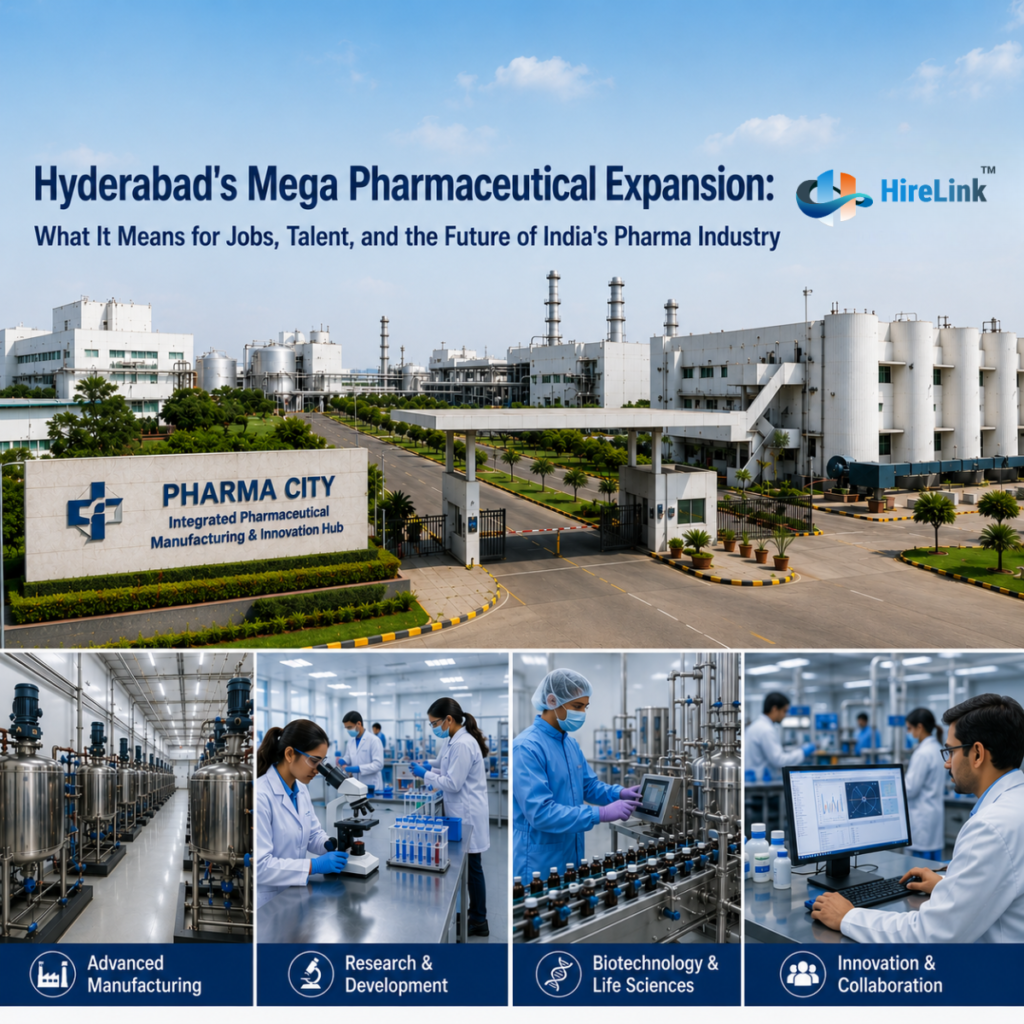
Hyderabad’s Mega Pharmaceutical Expansion: What It Means for Jobs, Talent, and the Future of India’s Pharma Industry 

Hyderabad has long been known as the “Pharma Capital of India.” Today, that position is becoming even stronger with the development of Hyderabad Pharma City—the world’s largest integrated pharmaceutical cluster—and the continued growth of Genome Valley, India’s premier life sciences and biotechnology ecosystem.  For the pharmaceutical industry, this growth is not only about infrastructure and capital investment—it is also about talent. As manufacturing facilities, R&D centers, biotechnology organizations, and Global Capability Centers expand their operations, the demand for specialized pharmaceutical professionals will continue to rise. This creates a growing need for recruitment partners who understand the industry’s technical functions, regulatory environment, and manufacturing ecosystems.  Hyderabad Pharma City: The World’s Largest Pharmaceutical Cluster  Hyderabad Pharma City is being developed across approximately 19,333 acres, making it the largest pharmaceutical industrial cluster in the world.  Strategically located with strong connectivity to key transportation and logistics networks, the project is designed to become a global pharmaceutical manufacturing destination.  The integrated ecosystem includes:  Such large-scale infrastructure can only achieve its full potential when supported by a highly skilled workforce. From scientists and researchers to manufacturing experts, quality professionals, engineers, regulatory specialists, and operational leaders, the success of this ecosystem will depend on experienced talent capable of driving innovation, compliance, efficiency, and sustainable growth.  As new facilities, research centers, and manufacturing operations become operational, the demand for specialized pharmaceutical professionals is expected to increase significantly. This expansion will create opportunities across the pharmaceutical value chain while intensifying competition for skilled talent, making workforce planning and talent acquisition key priorities for organizations looking to scale successfully.  Genome Valley: India’s Life Sciences Powerhouse  Complementing Hyderabad Pharma City is Genome Valley, India’s leading biotechnology and life sciences cluster.  Spread across more than 2,000 acres, Genome Valley has evolved into one of Asia’s most significant hubs for biotechnology, vaccine manufacturing, pharmaceutical research, and life sciences innovation. Often referred to as the “Vaccine Capital of the World,” it plays a critical role in global healthcare and continues to attract pharmaceutical, biotechnology, vaccine, and research organizations expanding their presence in India.  Beyond infrastructure and investment, Genome Valley’s true strength lies in its highly specialized talent ecosystem. The cluster creates opportunities across research and development, biotechnology, clinical research, manufacturing, quality assurance, regulatory affairs, pharmacovigilance, data sciences, and commercial functions.  As organizations continue to grow, the demand for skilled professionals is expected to rise significantly. Meeting this demand requires recruitment partners who understand the pharmaceutical and life sciences industry, the technical requirements of specialized roles, and the evolving talent landscape. The ability to identify and attract the right talent will play a crucial role in supporting innovation, business growth, and the long-term success of the ecosystem.  Together, Hyderabad Pharma City and Genome Valley are creating one of the world’s most comprehensive pharmaceutical and life sciences hubs, driving investment, innovation, and employment opportunities across the healthcare sector.  Why This Matters for Employment  The impact of Hyderabad’s pharmaceutical expansion extends far beyond the creation of new manufacturing facilities.  As investments continue to flow into the region, demand is expected to rise across the pharmaceutical value chain, including R&D, manufacturing, quality, regulatory affairs, engineering, supply chain, procurement, and commercial operations. Growth will also create opportunities across supporting sectors such as pharmaceutical machinery, packaging, logistics, laboratory services, and technology solutions.  For both experienced professionals and fresh graduates, Hyderabad is rapidly emerging as one of India’s most attractive destinations for careers in pharmaceuticals, biotechnology, and life sciences.  However, creating opportunities is only one part of the equation. As organizations expand and competition for skilled talent intensifies, the ability to identify, attract, and retain the right professionals will become increasingly important. Companies that partner with recruiters who understand the pharmaceutical industry, specialized roles, and evolving workforce trends will be better positioned to build high-performing teams and sustain long-term growth.  The Rise of Global Capability Centers (GCCs)  Another major trend supporting employment growth is the expansion of Global Capability Centers (GCCs).  Many of the world’s leading pharmaceutical, biotechnology, and healthcare organizations are strengthening their presence in Hyderabad to support global operations, regulatory functions, data analytics, pharmacovigilance, digital transformation initiatives, and shared business services.  As these centers expand, demand is increasing for professionals with expertise in life sciences, technology, analytics, compliance, and business operations.  The convergence of pharmaceutical knowledge and digital capabilities is creating a new generation of career opportunities for professionals entering the industry.  The Talent Challenge Ahead  While the opportunity is significant, rapid growth also creates challenges.  As more organizations establish operations within Hyderabad, Pharma City and Genome Valley, competition for skilled talent is expected to intensify. Companies will increasingly compete for experienced professionals across manufacturing, quality, regulatory, engineering, and leadership functions.  Organizations that can attract, engage, and retain specialized pharmaceutical talent will be better positioned to capitalize on these opportunities. However, hiring pharmaceutical and pharmaceutical manufacturing roles requires a deep understanding of technical competencies, regulatory requirements, manufacturing processes, and industry-specific career paths. As competition intensifies, organizations will increasingly benefit from recruitment partners who possess domain expertise and access to specialized talent networks.  Why Specialized Recruitment Will Play a Critical Role  As Hyderabad’s pharmaceutical and life sciences ecosystem continues to expand, finding the right talent will become just as important as building world-class infrastructure.  At HireLink™, we specialize in pharmaceutical, biotechnology, healthcare, and pharmaceutical manufacturing recruitment. Our deep understanding of industry functions, technical requirements, regulatory environments, and role-specific competencies enables us to identify professionals who are not only qualified on paper but are also aligned with the needs of the organization.  Whether hiring for Manufacturing, Production, Quality Assurance, Quality Control, Regulatory Affairs, Validation, Engineering, Supply Chain, Procurement, R&D, Sales, Marketing, Medical Affairs, or Leadership roles, we understand the technical requirements, industry terminology, compliance expectations, and operational realities behind each position. This enables us to assess talent beyond resumes and identify professionals who can create meaningful impact within pharmaceutical and pharmaceutical manufacturing organizations.  This industry-focused approach allows us to deliver more relevant talent, reduce hiring timelines, improve candidate quality, and support long-term workforce growth. As competition for skilled professionals increases, organizations that partner with recruiters who understand both the industry and the talent market will be better positioned to build high-performing teams and achieve sustainable growth.  In a rapidly evolving pharmaceutical landscape, the difference is not just

Hyderabad’s Mega Pharmaceutical Expansion: What It Means for Jobs, Talent, and the Future of India’s Pharma Industry  Read More »

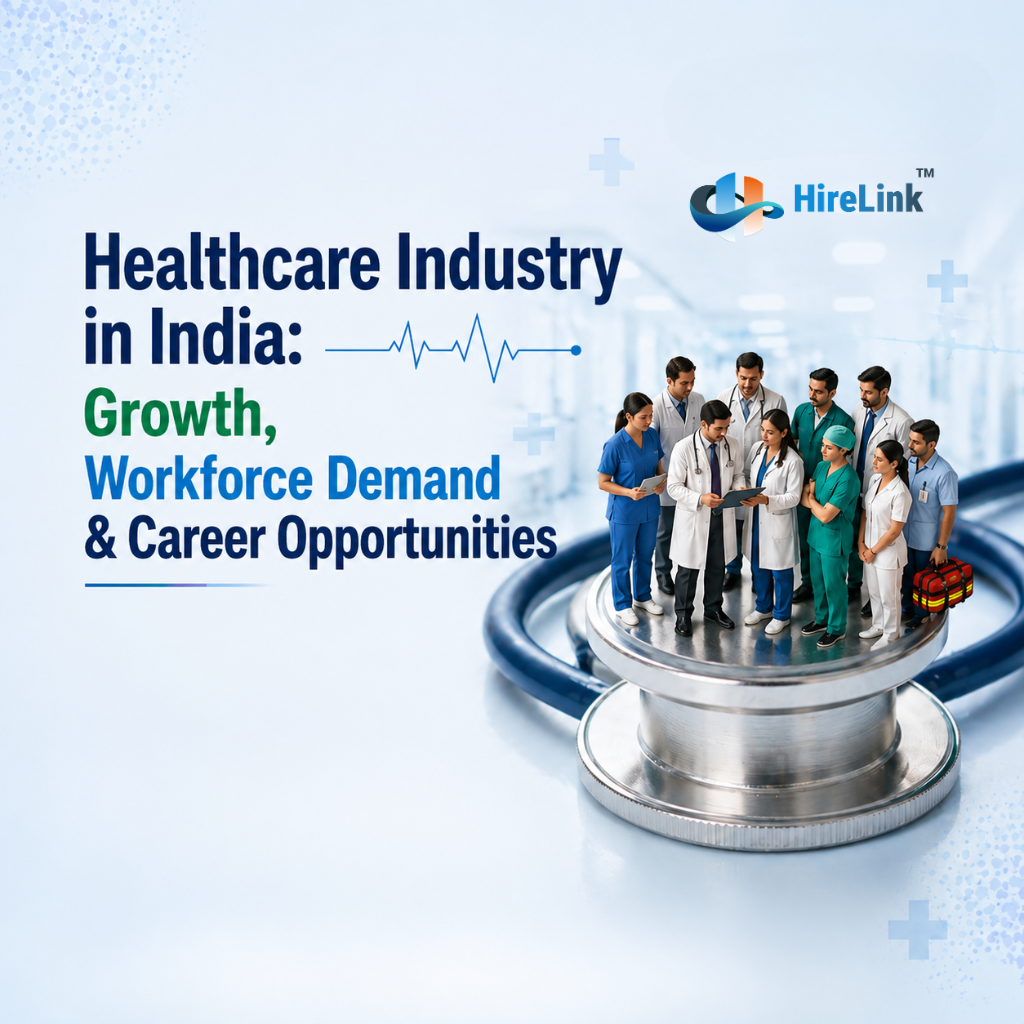
Healthcare Industry in India: Growth, Workforce Demand & Career Opportunities

Introduction India’s healthcare industry is undergoing a significant transformation, driven by increasing demand, expanding infrastructure, and evolving patient expectations. From hospitals and diagnostics to telemedicine and home-based care, the ecosystem is expanding rapidly. At the core of this growth is one critical factor—a skilled and reliable workforce. Healthcare today is not just about infrastructure or technology—it is about people delivering care, ensuring quality, and supporting patients across every stage of treatment. Industry Overview India’s healthcare sector continues to grow at a strong pace: With increasing investments and policy support, the industry is becoming more accessible and patient-centric. This expansion is creating significant demand for healthcare professionals across multiple roles. What is Driving the Growth? The Workforce Behind Healthcare Growth As the industry grows, the demand for trained and dependable professionals is increasing across all functions. From clinical care to operations, every aspect of healthcare delivery depends on skilled individuals working in coordination. The quality of healthcare outcomes is directly linked to the availability and capability of the workforce. Key Talent Segments in Healthcare Healthcare is supported by multiple talent segments: Each segment plays a role in ensuring efficient and continuous healthcare delivery. Evolving Role of Home Healthcare Nurses While all segments are important, one area seeing rapid growth is home healthcare nursing. With patients increasingly preferring treatment at home, the demand for skilled nurses outside hospital settings is rising. Home healthcare nurses support: 👩⚕️ Their Role Includes: 👉 They act as a bridge between hospital care and home recovery, making them an essential part of the evolving healthcare ecosystem. What Roles Do They Play? Healthcare talent translates into diverse roles: Together, these roles ensure continuous and quality healthcare delivery across different settings. Challenges in the Healthcare Industry Healthcare organizations face multiple operational challenges: Among these, availability of trained nurses—especially for home healthcare—is becoming a key concern. As care models shift beyond hospitals, the demand for reliable and skilled nursing talent continues to rise. Bridging the Gap Addressing these challenges requires a structured and domain-focused approach to healthcare hiring. At HireLink™, we support healthcare organizations by: This helps organizations build teams that support both quality care and operational efficiency. Future of Healthcare in India The future of healthcare will be shaped by: Healthcare delivery is moving towards a more integrated model, where hospital and home care work together. Conclusion India’s healthcare industry is expanding rapidly—but its strength lies in its workforce. While the industry continues to evolve, roles like home healthcare nurses will play an increasingly important role in shaping patient care beyond hospitals. At HireLink™, we focus on connecting the right talent with the right opportunities—ensuring a strong TalentFit™ across the healthcare ecosystem.

Healthcare Industry in India: Growth, Workforce Demand & Career Opportunities Read More »

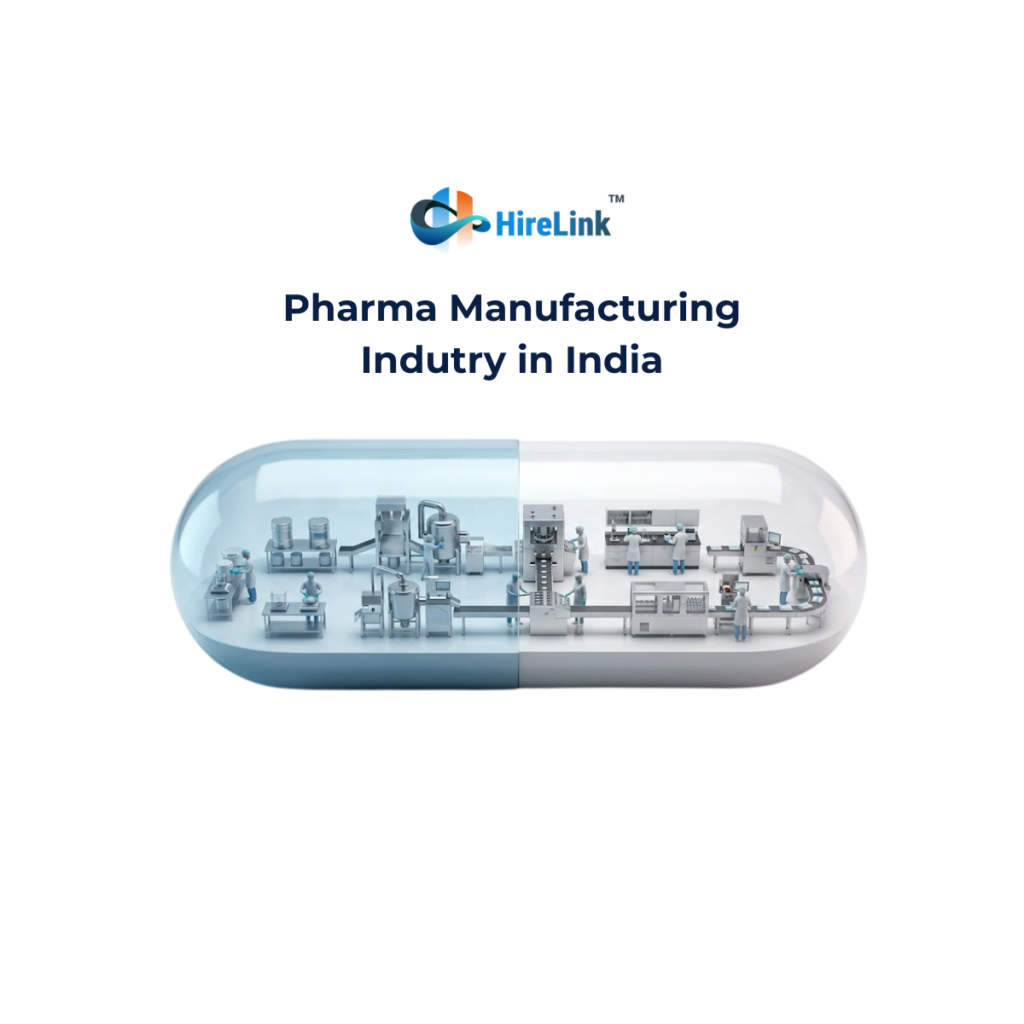
Pharma Manufacturing Industry in India: Growth & Talent Demand

Introduction India’s pharma industry is one of the strongest pillars of global healthcare. Known as the “Pharmacy of the World,” India supplies affordable medicines across 200+ countries. But behind this scale is not just infrastructure—it is talent, precision, and compliance-driven operations. Today, pharma manufacturing is not just about production. It is about quality, regulatory excellence, and having the right people in the right roles—something we at HireLink™ see closely while working with the industry.  Industry Overview India stands strong in the global pharma space: 🌍 3rd largest by volume globally💊 Supplies ~20% of global generics📦 Exports worth $30+ billion annually🌐 Serves 200+ countries With continuous expansion in manufacturing units and exports, the industry is growing rapidly. What is Driving the Growth? 📈 Rising global demand for affordable medicines🏭 Expansion of manufacturing plants🧪 Strict regulatory standards (USFDA, WHO, cGMP)🇮🇳 Government support (PLI schemes) Who is Behind this Growth? While infrastructure and policies drive expansion, the real backbone of pharma manufacturing is qualified and skilled professionals. Every stage—from raw material handling to final product release—requires trained talent with strong cGMP understanding, technical expertise, and attention to detail. 👉 Without the right workforce, even the most advanced manufacturing facility cannot operate efficiently—this is where HireLink™ focuses on enabling the right talent connections.  What Qualifications are Needed? Pharma manufacturing brings together professionals from diverse backgrounds, each playing a critical role in the ecosystem. 🧪 Life Sciences (B.Pharm, M.Pharm, B.Sc) Drives QA/QC, Regulatory, and ensures cGMP compliance ⚙️ Engineering (Mechanical, Electrical, Instrumentation) Manages HVAC, utilities, maintenance, and plant efficiency 🏭 Production (Diploma, B.Pharm, B.Sc) Handles manufacturing processes and batch operations 📦 Supply Chain & Management (BBA, MBA, B.Com) Ensures smooth procurement, inventory, and distribution Each segment plays a vital role in maintaining quality, compliance, and production efficiency—requiring a strong approach to match skills with roles.  What Roles Do They Play? Each talent segment contributes through specific roles in pharma manufacturing: 🧪 Life Sciences Professionals QA Executive, QC Analyst, Regulatory Affairs Associate, Validation Executive ⚙️ Engineering Professionals HVAC Engineer, Maintenance Engineer, Utility Engineer, Automation Engineer 🏭 Production Teams Production Executive, Production Supervisor, Shift Incharge, Plant Operator 📦 Supply Chain & Management Procurement Executive, Supply Chain Analyst, Warehouse Manager, Logistics Coordinator Identifying the right role alignment is critical—and this is where structured hiring frameworks play a key role.  Challenges Companies Face Pharma companies today face multiple operational challenges: These challenges directly impact critical business functions such as production timelines, quality standards, regulatory compliance, sales growth, and overall operational efficiency. While companies are actively addressing these through improved systems and processes, new strategies, innovation, and technology adoption, one major challenge still remains—finding the right people for the right roles with the right experience. This is where a domain expert recruitment partner like HireLink™ ensures access to the right talent—supporting smoother operations, faster hiring, and sustainable business growth. Conclusion Pharma manufacturing in India is evolving rapidly—but success ultimately depends on having the right talent in place at the right time. At HireLink™, we simplify this by delivering: Our focus is to help organizations build strong, reliable teams while making the hiring journey seamless for candidates. Hire smarter. Hire faster. HireLink™. Explore more opportunities on HireLink: www.hirelinkpro.com oin our WhatsApp Channel for early job updates: https://whatsapp.com/channel/0029VbBlPno5EjxyNuQZ360J

Pharma Manufacturing Industry in India: Growth & Talent Demand Read More »

Scroll to Top