



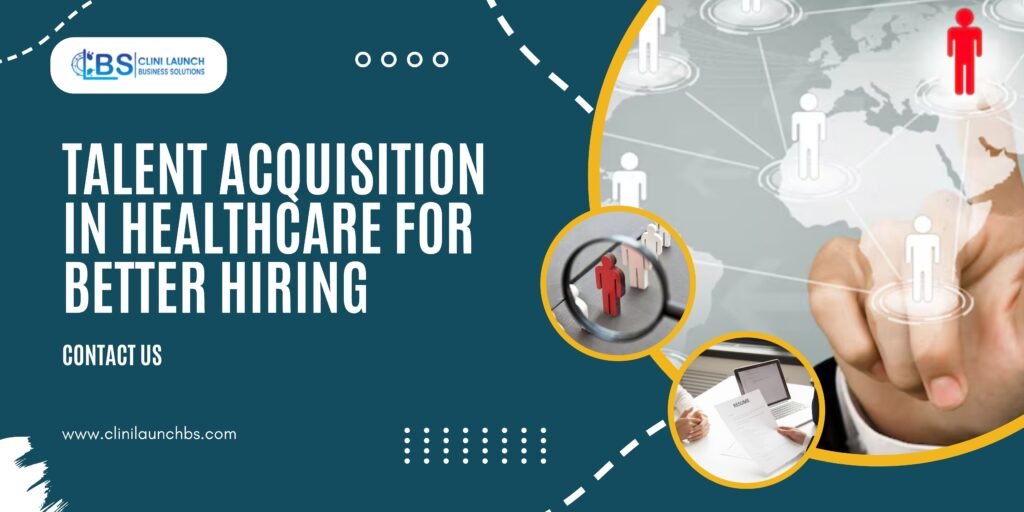
Talent Acquisition in Healthcare for Better Hiring
Healthcare is the process to diagnose, treat illness, and prevention from injuries and other physical and mental impairments. Talent acquisition in healthcare stands as a critical bridge to facilitate and bring thriving healthcare professionals to the organizations. Healthcare recruiters are tasked with an in-demand yet rewarding mission of directing these professionals into the designated roles. In a decade, we have witnessed a paradigm shift in hiring practices and talent acquisition in healthcare while facing unique challenges and opportunities. In this blog post, we will cover recruitment trends, workforce planning, diversity & inclusion in hiring, and employer branding. Healthcare Recruiting Trends As the healthcare industry is unique for its clinical and non-clinical operations, healthcare professionals are required to provide care for patients and run the business side of healthcare. As a result, the healthcare recruiting trends are especially challenging due to diverse factors. Some of the factors include talent shortages, high employee turnover rates, and the competitive nature of job seekers in the healthcare market. According to Jobvite, nearly 83% of clinical and 77% of non-clinical employees are open to other job opportunities in the healthcare sector. The healthcare industry faces challenges in the recruitment and retention due to shortage of skilled professionals, high turnover rates, and a competitive job market. However, the US Bureau of Labor Statistics projected that healthcare employment will grow from 2022 to 2032 with approximately 1.8 million job openings each year. In the context of the American Association of Colleges of Nursing, approximately 30,000 new APRNs (Advanced Practice Registered Nurses) will be required each year to meet the rising demand of healthcare professionals. This may add pressure on healthcare recruiters to not only hire top talent, but also retain existing employees. As the need is growing each year for healthcare talent acquisition, the employers can no longer rely on reactive hiring. In 2025, organizations must shift to strategic talent acquisition in healthcare to attract and retain top-notch talent with employee value proposition (EVP). It does mean transformation of employer branding, retention efforts, and recruitment marketing in one roof that will inspire both current staff and future talent. Artificial Intelligence and Automation Artificial Intelligence is automating tasks while improving efficiency with Applicant Tracking System that can analyze resumes, identify key skills and rank candidates based on job requirements. This streamlines that screening process and allows recruiters to focus on the most promising applicants. Furthermore, AI can schedule interviews and source candidates from various online platforms, and even predict candidate success. However, it is crucial to use artificial intelligence responsibly. Ensuring data privacy, mitigating algorithmic bias, and maintaining human oversight are essential to ensure a fair and ethical recruitment process. By leveraging AI’s potential while addressing these concerns, companies can improve the hiring quality, candidate’s experience enhancement, and build a more diverse and inclusive workforce. Remote and Hybrid Work With the increase in remote and hybrid working models, driven by factors such as technological advancements, employee preference for flexibility, and the need to improve access to care. Telehealth, remote patient monitoring, and virtual consultations have expanded the scope of remote healthcare services. This shift necessitates a corresponding evolution in recruitment strategies. Healthcare organizations must adapt their hiring processes to attract and retain top talent from a broader geographical pool, focusing on skills, experience and cultural fit rather than solely on location. Remote hiring presents both challenges and benefits. Challenges include ensuring compliance with relevant regulations. However, remote work also offers significant advantages, such as access to a larger talent pool, increased employee satisfaction and retention, and reduced overhead costs. With the careful consideration, implementing appropriate technologies, and support systems, healthcare organizations can successfully navigate the evolving landscape of remote work and build high-performing, distributed teams. Candidate Experience A positive candidate’s experience is crucial for attracting and retaining top talent. It goes beyond simply filling a vacancy, it is about building a strong employer brand while fostering long-term relationships with potential employees. When candidates feel valued and respected throughout the hiring process, they are more likely to accept job offers, become engaged employees, and become brand ambassadors for the company. This can significantly impact a company’s reputation and ability to attract future talent. With the improvement in candidate’s communication and engagement, companies can implement several strategies. This may include timely and transparent communication throughout the hiring process, providing regular updates on the status of their application, and promptly addressing any questions or concerns. Utilizing technology These include timely and transparent communication throughout the hiring process, providing regular updates on the status of their application, and promptly addressing any questions or concerns. Utilizing technology such as AI-powered chatbots and automated scheduling tools can streamline communication and improve efficiency. Personalizing the experience by addressing candidates by name and tailoring communication to their specific interests can also enhance engagement. By prioritizing a positive candidate experience, companies can build stronger relationships with potential employees and gain a competitive advantage in the talent market. Healthcare Workforce Planning In the context of a workforce, the Association of American Medical Colleges conducted a study estimating that the U.S. will face a shortage of approximately 104,900 physicians by 2030. As it is a typical challenge in the healthcare sector as it is growing, there is a shortage of essential clinical and non-clinical staff across the country. Anticipating Future Needs Analyzing workforce trends and predicting future staffing needs is crucial for any organization’s success. By understanding the evolving skills landscape, demographic shifts, and technological advancements, businesses can proactively address potential challenges and capitalize on emerging opportunities. This proactive approach allows for strategic workforce planning, ensuring the right talent is available at the right time to support business growth and achieve strategic objectives. Workforce analytics plays a vital role in this process. By collecting and analyzing data on employee demographics, skills, performance, and other relevant factors, organizations can gain valuable insights into their current workforce. These insights can be used to identify potential skill gaps, predict future staffing needs, and develop targeted strategies for recruitment, training, and development.
Talent Acquisition in Healthcare for Better Hiring Read More »